
How to Eat Healthy at a Buffet
Last updated: October 7, 2026 · Verified against official Golden Corral info
This guide covers how to eat healthy at a buffet. A buffet does not have to wreck a healthy diet. With a simple plan, you can enjoy an all you can eat meal and still eat well. The trick is to manage two things, the food you choose and the amount you eat. This guide gives practical rules that work at any buffet, from a smart plate plan to portion tricks and the traps to sidestep. It is general guidance, not medical advice, so follow any plan your doctor set.
Quick facts about how to eat healthy at a buffet
Practical rules for eating healthy at any all you can eat buffet, from a smart plate plan to portion tricks and the traps to avoid. Golden Corral is an American buffet restaurant chain.
The real challenge is the format
The hardest part of eating healthy at a buffet is not finding healthy food. Most buffets have plenty of it. The real challenge is the unlimited format, which makes it easy to eat far more than you planned. Studies of eating behavior show that more variety and larger available portions push people to eat more, often without noticing.
So a healthy buffet plan has to manage volume, not just food choice. You can pick perfect foods and still overeat if you take too many trips. Once you accept that the format itself is the challenge, the rules below make sense. They are designed to help you enjoy the variety while keeping the total in check.
Survey before you serve
The first rule is to walk the whole buffet before you take anything. This simple step changes everything. When you see all the options first, you can plan a balanced plate. When you serve on impulse at the first tray, you fill up before you reach the best choices.
After you scout, decide what earns a place on your plate. Aim to fill most of it with vegetables and lean protein, with a small amount of a treat you truly want. A plan made before you serve beats willpower used after, since it is far easier to choose well when you are not already holding a full plate.
Use the plate method
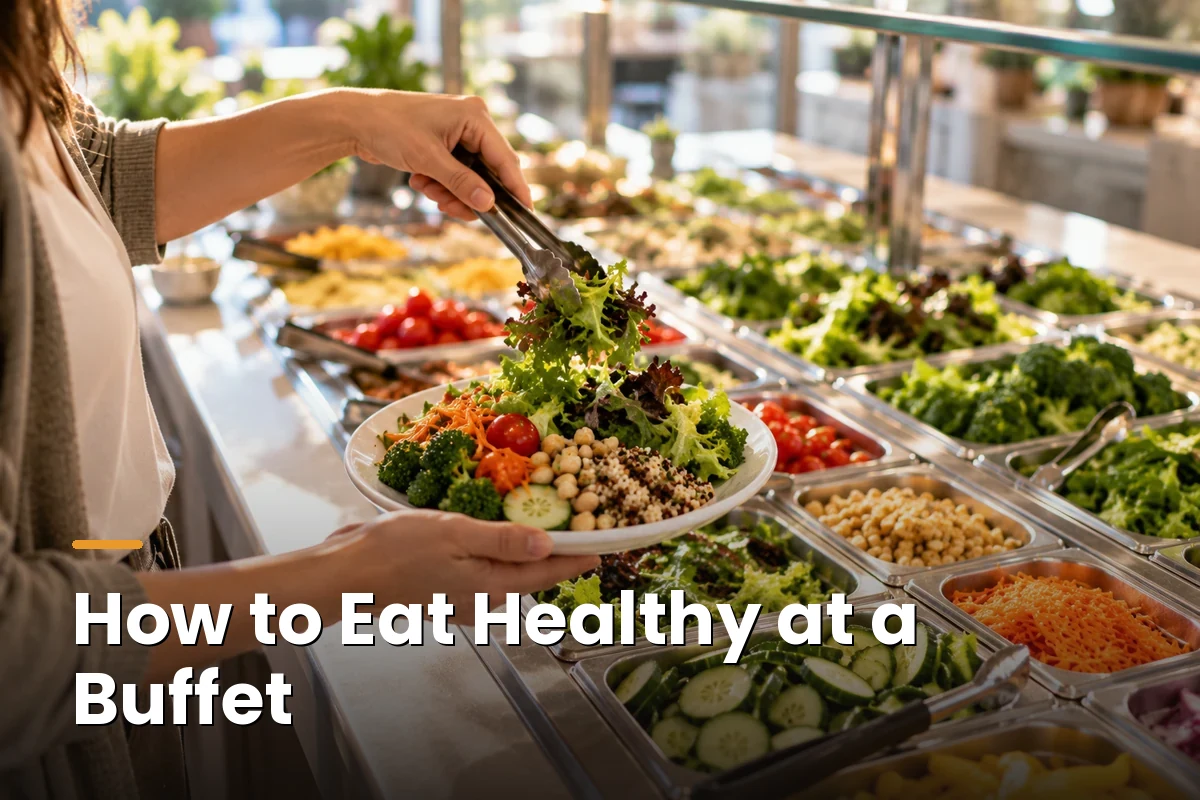
A well known guide makes healthy plating easy. Fill half your plate with vegetables and salad, a quarter with lean protein, and a quarter with a grain or starch. This balance, promoted in national dietary guidance, gives you fiber, protein, and satisfaction without overload.
Apply it at the buffet by starting at the salad bar and the grill. Build a big base of vegetables, add a palm sized portion of lean meat, and leave a small space for a starch. This visual method removes the guesswork. You do not need to count calories, just fill the plate in those proportions, and the meal stays balanced.
Lead with protein and vegetables
Protein and vegetables are your best friends at a buffet. Protein takes longer to digest, so it keeps you full and reduces the pull toward another trip. Vegetables add fiber and bulk for few calories, filling you up without weighing you down.
So build your plate around grilled or roasted lean meats, eggs, beans, and a big serving of vegetables and salad. These foods satisfy you, which naturally limits how much else you eat. Lean on them and the rest of the meal takes care of itself, since you arrive at fullness on nutritious food rather than on fried items and bread.
Choose grilled over fried
A single swap cuts a lot of fat and calories. Choose grilled, roasted, or steamed foods over fried ones. Fried items soak up oil and pack the most calories, while grilled and roasted foods deliver flavor with far less added fat.
This applies across the whole buffet. Pick grilled chicken over fried, roasted vegetables over creamy casseroles, and a fresh salad over a heavy pasta salad. The grilled option almost always tastes fresh and lighter. Making this swap your default is one of the easiest ways to eat healthier at any buffet without giving up on flavor or feeling deprived.
Watch the dressings and sauces
Hidden calories often hide in dressings and sauces. A healthy salad can turn into the heaviest plate of the meal under a pile of creamy dressing, cheese, croutons, and bacon bits. A grilled piece of meat can gain a lot from a rich, sugary sauce.
So go light here. Use dressing sparingly, or choose oil and vinegar. Better still, dip your fork in the dressing rather than pouring it over the plate, which cuts the amount by a lot. Ask for sauces on the side and use them lightly. Controlling these extras keeps your healthy choices actually healthy.
Mind your portions
Portion control is where buffets test you most. A good trick is to use one plate and fill it once with a balanced mix, then decide honestly whether you want more. Visual cues help too. A serving of meat about the size of your palm and a fist of vegetables are sensible portions.
You do not need to weigh anything. Just serve reasonable amounts and avoid the urge to pile the plate high on the first trip. The format is unlimited, so you can always go back. Taking modest portions and pausing between trips keeps the total in check far better than loading up all at once.
Slow down and pace yourself
Speed drives overeating. Fullness signals take about twenty minutes to reach your brain, so a fast eater blows past the point of satisfaction before noticing. Slowing down is one of the most effective healthy eating habits at a buffet.
Talk between bites, sip water, and put your fork down now and then. After your first plate, pause for a few minutes and check whether you are truly still hungry. Often you are not, and you save yourself the heavy, stuffed feeling. Giving your body time to register fullness lets you stop at the right point rather than well past it.
Drink water, skip the sugary drinks
Beverages are an easy place to save calories. Sugary sodas and sweet tea add calories you drink without noticing, and they can add up to a large amount over a meal. Water or unsweetened tea keeps the meal lighter and lets the food fill you.
Water also helps in another way. A glass before you eat takes the edge off your hunger, so you serve a smaller first plate, and sipping through the meal helps you notice fullness. So make water your default drink at a buffet. It saves calories, saves money, and supports the pacing that keeps the meal balanced.
Handle the dessert bar
The dessert bar is the final test, mostly because of how buffets end. After several trips, a wall of sweets sits between you and the exit. The fix is a plan made before you get there. Decide in advance that you will choose one small dessert you truly want, rather than a sampler of many.
A single small treat satisfies the craving without undoing the meal. If you are already full, you can skip dessert entirely. Managing this one station well protects the whole meal, since the dessert bar is where a careful buffet visit most often falls apart. A little discipline here keeps the whole plan on track.
Do not arrive starving
A common mistake sabotages healthy eating before you even arrive. Skipping meals all day to save room for a buffet backfires. Arriving very hungry pushes you to overeat and to grab the first heavy foods you see, which are often the least healthy.
Instead, eat normally during the day, with a light, protein rich snack a couple of hours before if needed. That keeps your hunger steady, so you walk in able to make good choices rather than desperate ones. Coming reasonably hungry, not starving, is a simple but powerful step toward a balanced buffet meal.
Eating healthy for a specific diet
Different diets need slightly different choices at a buffet, though the core rules hold. If you follow a low carb or keto plan, build your plate from grilled meats, eggs, cheese, and non starchy vegetables, and skip bread, breaded items, and sugary sauces. If you watch your heart or blood pressure, favor plain, fresh foods and go easy on the salt heavy dishes, since restaurant food runs high in sodium.
If you are managing blood sugar, center the plate on lean protein and vegetables and limit starch and sweets. Vegetarians can build a full plate from the salad bar, vegetable sides, and other meatless options. Whatever your diet, the wide range at a buffet gives you room to build a suitable plate, as long as you choose carefully. Anyone with a medical condition should follow their own care plan.
Eating healthy at different buffet types
The rules adapt to the kind of buffet. At an American buffet, lean on the salad bar, the grill, and steamed vegetables. At a Chinese buffet, choose steamed dishes and plain proteins over the sweet, fried, and heavily sauced options, and watch portion sizes of rice and noodles.
At a pizza buffet, pair a slice or two with a big salad rather than eating pizza alone, and stop before the endless slices add up. At a breakfast buffet, choose eggs, fruit, and whole grains over pastries and fried breakfast meats. The core method, survey first, use the plate method, and manage portions, works everywhere. You just apply it to whatever foods that buffet offers.
Building a healthy habit over time
One buffet meal will not make or break your health, so keep it in perspective. What matters is your overall pattern of eating. If you eat well most of the time, an occasional buffet meal fits fine, even if you enjoy a treat. The goal is balance across days and weeks, not perfection at a single meal.
So do not stress over one visit. Use the rules to keep a buffet meal reasonable, enjoy the experience, and return to your normal healthy eating afterward. A light dinner after a big buffet lunch balances the day. Treating healthy eating as a long term habit, rather than a rule you must never break, makes it sustainable and keeps a buffet meal a pleasure rather than a source of guilt.
The takeaway
Eating healthy at a buffet comes down to managing both your choices and your volume. Survey the whole line before you serve, then use the plate method, with half vegetables, a quarter lean protein, and a quarter starch. Lead with protein and vegetables, choose grilled over fried, and go light on dressings and sauces. Control your portions, slow down, drink water, and handle the dessert bar with a plan. Do not arrive starving. Put these rules together and you can enjoy any all you can eat buffet while still eating well, leaving satisfied instead of stuffed.
For official guidance, see USDA MyPlate.
Related guides
- The Healthiest Things to Eat at Golden Corral
- Is Golden Corral Healthy?
- Golden Corral Vegetarian Options
- Golden Corral buffet prices
- buffet hours
- full buffet menu
Frequently asked questions
Can you eat healthy at a buffet?
What is the best plate strategy?
What foods should I choose?
How do I avoid overeating?
Should I skip meals before a buffet?
How do I handle dessert?
Are drinks a problem?
Is it okay to go back for seconds?
How do I eat healthy on a special diet?
Does one buffet meal ruin a diet?
What is the easiest single healthy swap?
Can you eat healthy at a buffet?
Yes, with a plan that manages both food choices and total volume.
What is the best plate strategy?
The plate method, with half vegetables, a quarter lean protein, and a quarter starch.
What foods should I choose?
Grilled or roasted lean meats, a big salad, and vegetables, with fried and creamy items kept small.
How do I avoid overeating?
Survey first, use one plate, slow down, drink water, and pause before going back.
Should I skip meals before a buffet?
No. Arriving starving leads to overeating, so eat normally and come reasonably hungry.
How do I handle dessert?
Choose one small dessert you truly want, rather than a plate of many, or skip it if you are full.
Are drinks a problem?
Sugary drinks add hidden calories, so choose water or unsweetened tea instead.
Is it okay to go back for seconds?
Yes, if you go back for more vegetables and lean protein rather than fried food and dessert.
How do I eat healthy on a special diet?
Focus on plain, fresh foods you can control, like grilled meat, salad, and steamed vegetables, and follow your own care plan.
Does one buffet meal ruin a diet?
No. What matters is your overall pattern, so keep one meal in perspective and return to your normal eating after.
What is the easiest single healthy swap?
Choosing grilled or roasted food over fried, which cuts a lot of fat and calories with no loss of flavor.


