
Golden Corral Pot Roast (Copycat Recipe)
Last updated: October 7, 2026 · Verified against official Golden Corral info
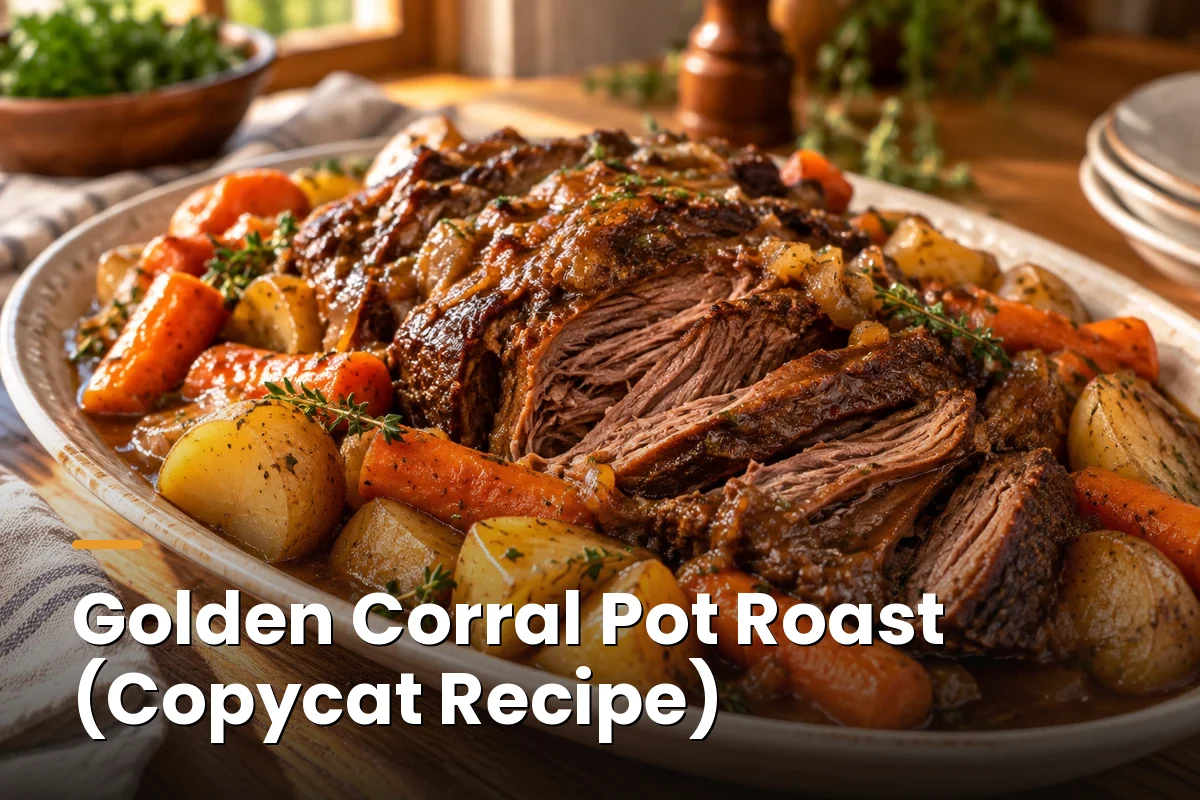
This guide covers golden corral pot roast recipe. This copycat brings the buffet’s tender pot roast to your table. A tough, budget cut of beef turns fork tender through slow, gentle cooking, surrounded by carrots and potatoes in a rich, savory gravy. It is mostly hands off, so the oven or slow cooker does the work while you go about your day. Follow the steps below and you get a warm, homestyle roast that fills the house with a comforting smell and tastes like a Sunday dinner.
Quick facts about golden corral pot roast recipe
Make tender, slow cooked pot roast with carrots, potatoes, and rich gravy at home, with oven and slow cooker methods and tips for fall apart beef. Golden Corral is an American buffet restaurant chain.
What makes this dish work
Pot roast is a lesson in patience. It starts with a cheap, tough cut of beef, full of connective tissue. Cooked fast, that meat stays chewy. Cooked low and slow with liquid, the tough tissue breaks down into soft, rich gelatin, and the meat turns fork tender. Time, not a fancy technique, is the real secret.
The other key is building flavor at the start. A good sear on the beef, plus onions and garlic cooked in the same pan, creates a deep, savory base. That browned flavor carries through the whole dish and into the gravy.
Ingredients
You need a three to four pound beef chuck roast, which is the best cut for this dish. Add two tablespoons of oil for searing, one large onion cut into chunks, three cloves of garlic, and about two cups of beef broth. A spoon of tomato paste and a splash of Worcestershire sauce deepen the flavor.
For the vegetables, use one pound of carrots cut into large pieces and one and a half pounds of potatoes, halved or quartered. Season with salt, pepper, and a few sprigs of fresh thyme or a teaspoon of dried herbs. Keep a little flour or cornstarch aside to thicken the gravy at the end.
Step by step, oven method
First, season and sear. Pat the roast dry and season it well with salt and pepper. Heat the oil in a large oven safe pot over medium high heat. Sear the roast on all sides until deeply browned, about three to four minutes per side. This step builds flavor, so do not skip it.
Second, cook the aromatics. Remove the roast. In the same pot, add the onion and garlic and cook until soft. Stir in the tomato paste and cook it for a minute. Pour in the broth and Worcestershire sauce, scraping up the browned bits from the bottom, since that is pure flavor.
Third, slow cook the beef. Return the roast to the pot. Add the thyme, cover the pot, and place it in a 300 degree Fahrenheit oven. Cook it for about three hours, until the beef starts to turn tender.
Fourth, add the vegetables. Add the carrots and potatoes around the roast. Cover and return the pot to the oven for about one more hour, until the beef pulls apart easily and the vegetables are tender.
Fifth, make the gravy. Move the roast and vegetables to a platter. Place the pot on the stove over medium heat. Stir a spoon of cornstarch mixed with cold water into the cooking liquid and simmer until it thickens into a rich gravy. Taste and adjust the salt.
Step by step, slow cooker method
The slow cooker makes this even easier. Sear the roast and cook the aromatics in a pan first, since that browning matters. Then move everything to the slow cooker with the broth and herbs. Cook it on low for about eight hours or on high for about five, adding the vegetables partway through so they do not turn to mush. Thicken the gravy on the stove at the end, the same way as the oven method.
Tips for fall apart beef
The most important tip is to use a chuck roast. It has the fat and connective tissue that melt into tender, juicy meat over long cooking. Leaner cuts stay dry and tough no matter how long you cook them.
Cook it low and slow, and do not rush it. The meat passes through a tough stage before it turns tender, so if it feels chewy, it usually needs more time, not less. Keep the liquid at a gentle simmer, never a hard boil, which can make the meat stringy.
A good sear at the start pays off in the final flavor. Take the time to brown all sides deeply. Season in layers too, with salt on the meat, in the liquid, and again in the finished gravy to taste.
Common mistakes to avoid
The top mistake is choosing the wrong cut. A lean roast will disappoint every time. Use chuck for the best result. The second mistake is undercooking. If the beef is tough, it is not done, so give it more time until it shreds easily with a fork.
A third mistake is mushy vegetables. Add the carrots and potatoes later in the cooking, not at the start, so they finish tender but not falling apart. A fourth mistake is a thin, watery gravy. Reduce the liquid or thicken it with a cornstarch slurry at the end for a rich, spoon coating gravy.
Ways to change it up
This recipe welcomes small changes. Add mushrooms or parsnips along with the carrots for more depth. Stir a splash of red wine into the broth for a richer gravy. Use baby potatoes whole for an easier prep.
For a different flavor, add a packet of onion soup mix or a bay leaf to the pot. You can also shred the leftover beef and use it for sandwiches, tacos, or over noodles. The tender meat and gravy work in many meals beyond the first plate.
Make ahead, storage, and reheating
Pot roast is a great make ahead meal, and many people find it tastes even better the next day, once the flavors settle. Cook it a day ahead, chill it, and reheat it gently before serving.
Store leftovers in a sealed container in the fridge for up to four days. Reheat portions on the stove or in the microwave with a little extra broth to keep the meat moist. Pot roast also freezes well for up to three months. Freeze the beef and gravy together so the meat stays juicy, then thaw in the fridge before reheating.
Ingredient notes and swaps
The cut of beef matters most, and chuck roast is the clear winner for its marbling. If you cannot find chuck, a brisket or a bottom round roast works, though each cooks a little differently. Avoid lean cuts like sirloin roast, which turn dry over long cooking.
For the liquid, beef broth builds the richest gravy, but a mix of broth and water works. A splash of red wine adds depth, and a little balsamic vinegar brightens the sauce if you have no wine. Yukon Gold or red potatoes hold their shape better than russets, which can turn mealy. Swap in parsnips or turnips for some of the carrots for a different sweetness.
How to scale it for a crowd
Pot roast feeds a group from one pot, which makes it a Sunday favorite. Use a larger roast and a bigger pot, keeping the meat mostly covered in liquid. A bigger roast needs more time, so plan for a longer cook and test with a fork rather than the clock.
For a very large group, cook two smaller roasts rather than one huge one, since even cooking is easier that way. Keep the finished roast and vegetables warm in the covered pot or a slow cooker on the warm setting. The gravy stretches easily, so make extra to spoon over both the meat and the potatoes.
A lighter, healthier plate
You can make this hearty dish a little lighter. Trim visible fat from the roast before cooking, and skim the fat off the top of the cooking liquid before you make the gravy. Load the pot with extra vegetables, like more carrots, celery, and mushrooms, which stretch the meal and add fiber.
Serve smaller portions of beef alongside a big helping of vegetables to balance the plate. Use the rich broth to flavor the vegetables so nothing tastes plain. These small moves keep the comfort of a pot roast while making it a more balanced dinner, which helps when you feed a family with different goals.
Troubleshooting your roast
Pot roast rarely fails, but a few problems have clear fixes. If the beef came out tough, it needs more time, since the meat turns tender only after the connective tissue breaks down. Return it to the pot and keep cooking low and slow until a fork slides in easily.
If the gravy is thin, reduce the liquid on the stove or stir in a cornstarch slurry until it coats a spoon. If it is too thick, loosen it with a little broth. If the vegetables turned to mush, they cooked too long, so add them later in the process next time. If the dish tastes flat, it needs salt, so season the meat, the liquid, and the finished gravy in layers and taste at the end.
Prep and equipment tips
The right pot makes this dish easier. A heavy Dutch oven works for both the stovetop sear and the slow oven cook, so you use one pan from start to finish. A slow cooker frees the oven and runs while you are away, which suits a busy day.
Prep the vegetables in large chunks, since small pieces overcook during the long braise. Pat the roast very dry before searing, which helps it brown instead of steam. Sear in a hot pan without moving the meat too soon, so a deep crust forms. That crust and the browned bits left in the pan build the rich flavor that carries the whole dish, so give the sear the time it needs.
Recipe at a glance
Here is the quick version. Prep takes about twenty minutes, and the slow cook runs about four hours in the oven or up to eight hours in a slow cooker. It serves six to eight people and makes plenty of leftovers. The difficulty is easy, since the oven or slow cooker does most of the work while you go about your day.
You need a heavy Dutch oven or a slow cooker, plus a knife and cutting board for the vegetables. The main skills are searing the beef well and cooking it low and slow until it turns tender. There is little active work, which makes this a great choice for a lazy Sunday or a busy weekday when you can start it early and let it cook.
The takeaway
This copycat pot roast turns a cheap cut into a tender, comforting meal with almost no active work. Use a chuck roast, sear it well, and cook it low and slow until it pulls apart with a fork. Add the carrots and potatoes late so they stay whole, and thicken the cooking liquid into a rich gravy at the end. Avoid lean cuts and rushed cooking, and you get the fall apart beef the buffet is loved for. Make it on a slow weekend, and enjoy the leftovers in a dozen ways all week.
Related guides
- 25 Golden Corral Copycat Recipes to Make at Home
- Golden Corral Yeast Rolls (Copycat Recipe)
- Golden Corral Mac and Cheese (Copycat Recipe)
- Golden Corral buffet prices
- buffet hours
- full buffet menu
Frequently asked questions
What cut of beef is best?
Can I use a slow cooker?
Why is my roast tough?
How do I thicken the gravy?
How long does it keep?
Can I make it in an Instant Pot?
What is the best cut for pot roast?
Can I add other vegetables?
Why is my roast dry?
What can I do with leftovers?
What cut of beef is best?
A chuck roast, since its fat and connective tissue turn tender over slow cooking.
Can I use a slow cooker?
Yes. Sear the beef first, then cook on low for about eight hours, adding vegetables partway through.
Why is my roast tough?
It needs more time. The meat passes through a tough stage before it turns tender.
How do I thicken the gravy?
Stir a mix of cornstarch and cold water into the cooking liquid and simmer until it coats a spoon.
How long does it keep?
Up to four days in the fridge, or three months in the freezer.
Can I make it in an Instant Pot?
Yes. Sear the meat using the saute function, then pressure cook until fork tender and finish the gravy after.
What is the best cut for pot roast?
Chuck roast, thanks to the marbling and connective tissue that turn tender over slow cooking.
Can I add other vegetables?
Yes. Mushrooms, parsnips, celery, and turnips all work well alongside the carrots and potatoes.
Why is my roast dry?
It may be a lean cut, since lean roasts dry out. Use chuck and keep the pot covered with liquid.
What can I do with leftovers?
Shred the beef for sandwiches, tacos, or a topping over noodles or rice.


