
How Golden Corral To-Go Works
Last updated: October 7, 2026 · Verified against official Golden Corral info
This guide covers how golden corral to go works. Takeout at this buffet works differently from a normal restaurant. You do not order off a menu. You fill a container from the buffet line, staff weigh it at the register, and you pay by the pound. The system is called weigh and pay. It gives you full control over what you take, but the price depends on how you pack the box. Here is how the whole process works, how to pack for value, and how to get your food home safely.
Quick facts about how golden corral to go works
How buffet takeout works, how weigh and pay pricing is figured, what counts in the weight, food safety for the drive, and how to order. Golden Corral is an American buffet restaurant chain.
The basic idea
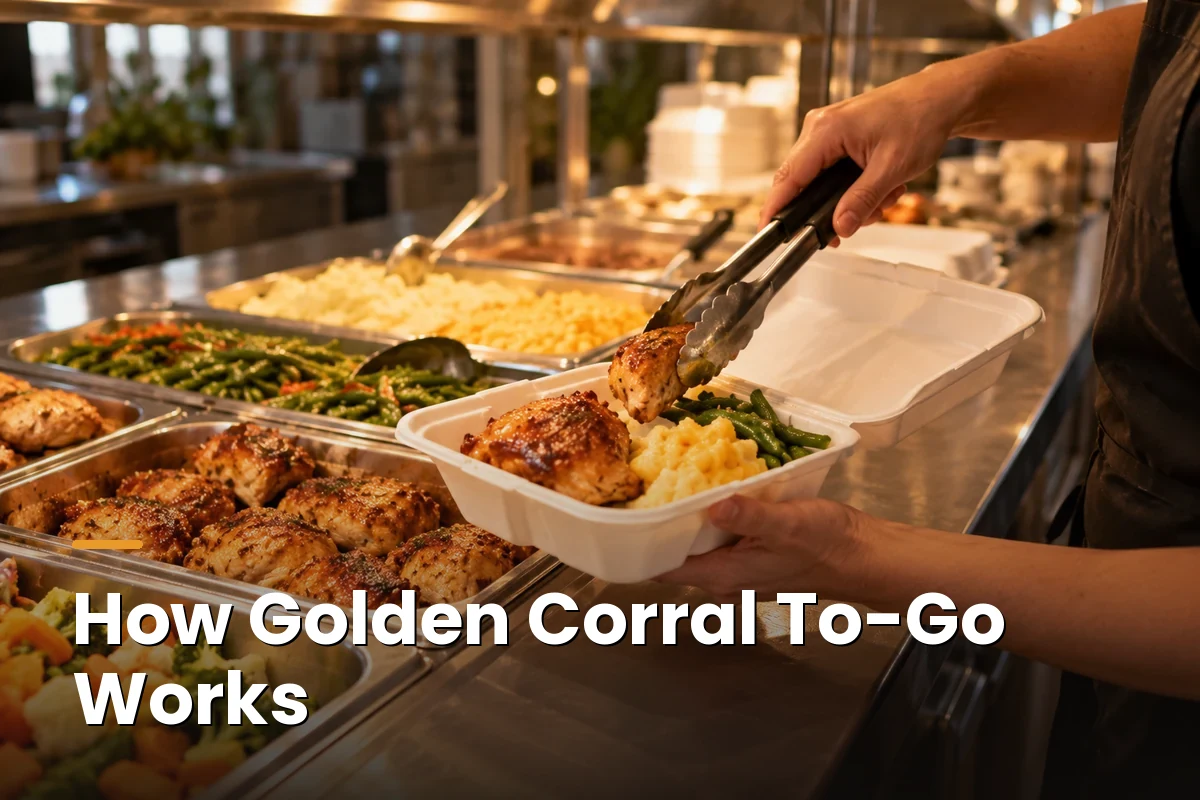
A normal takeout order has set prices for set dishes. This works by weight instead. You grab a to go container, walk the same buffet line as dine in guests, and choose whatever you want. At checkout, staff place the filled container on a scale. You pay a set price for each pound.
That model has one big upside. You are not locked into portions someone else picked. Want a box of only grilled meat and vegetables? You can build exactly that. Want a spread of a dozen small tastes? That works too. The freedom is the whole point.
How the price is figured
The per pound rate varies by location and can change over time, so confirm the current rate at your restaurant before you fill up. As a general guide, buffet by the pound tends to fall in the range of a few dollars to under ten dollars per pound at many places.
Here is the key point most guides skip. The rate is the same for every food, but foods do not weigh the same. Dense, wet foods weigh a lot. Light foods weigh little. A box packed with saucy pasta and mashed potatoes costs more than the same size box of grilled chicken and salad, because the first box is heavier.
That fact changes how a smart shopper packs. If you want value, favor lighter, higher quality foods. Grilled meat, roasted vegetables, and salad give you more nutrition per pound than heavy, watery sides. A wet casserole fills the box with weight you pay for but may not want. Think of the scale as the price tag and pack with your eyes open.
What counts in the weight
Ask before you assume. At many locations, the container itself gets included when they weigh the box, though policies differ. Sauces and dressings add weight too, so a heavy pour of gravy raises the price. Ice and drinks are usually charged separately and are not part of the weigh and pay total.
Because the details vary, a quick question at the start saves confusion. Ask a staff member how they weigh, whether the box counts, and what the current per pound price is. Thirty seconds of asking prevents a surprise at the register and helps you pack smart from the first scoop.
Step by step
The process is simple once you know it. First, tell a staff member or the host that you want a to go order. They point you to the containers and explain the local rules.
Second, walk the buffet line and fill your container. Pack it the way you want, keeping the weight tip in mind if value matters to you. Keep wet and dry foods a little separate so nothing turns soggy on the drive.
Third, bring the filled box to the register. Staff weigh it and calculate the price by the pound.
Fourth, add any drinks separately and pay. Then you carry your custom meal home.
Pack for the drive, not just the box
A to go box faces a challenge a dine in plate never does. It has to survive the trip and still taste good. Some foods travel well. Others fall apart.
Grilled and roasted meats hold up on the drive. Firm vegetables travel fine. Rice and pasta survive, though saucy versions can turn heavy. Salads travel best with the dressing kept on the side, so the greens stay crisp.
Fried food is the weak point. Sealed in a warm box, a crisp coating steams and goes soft within minutes. If you love the fried items, eat those in the restaurant and save the box for foods that hold. Delicate desserts also struggle, so choose sturdy sweets if you want dessert to go.
Food safety for the trip home
This part matters more than most guides admit. Hot food left at room temperature grows bacteria over time. Food safety guidance from the United States Department of Agriculture says perishable food should not sit in the danger zone between about 40 and 140 degrees Fahrenheit for more than two hours, and no more than one hour when it is very hot outside, around 90 degrees or above.
So plan the trip. Drive straight home. Refrigerate anything you will not eat right away. If your commute is long or the day is hot, bring a cooler bag to hold temperature. When you reheat leftovers later, heat them until steaming hot all the way through. These simple steps keep a great meal from turning into a stomachache.
When to pack the freshest box
The same freshness rule that applies to dine in applies here. Food quality rises and falls through the day. If you pack your box near the start of a meal service, you get fresher food than you would at the tail end of a shift. A to go box also sits a while before you eat, so starting with fresh food gives you a better meal at home. Aim for the open of lunch or dinner, and follow the fresh pans just as a dine in guest would.
Delivery as an alternative
If you cannot go in person, some locations offer delivery through third party apps. That route uses set menu items and set prices rather than weigh and pay, and it adds service and delivery fees. It trades the custom, pay by weight freedom for convenience. Check whether your location lists on a delivery app if you want food brought to you, and expect the total to run higher than an in person weigh and pay order of the same size.
Is to go worth it?
Weigh and pay shines when you want control. You choose the exact foods, the exact amount, and you skip the dining room. For a single custom meal, it often beats guessing at a set menu. It also lets a light eater pay only for what they take, which the dine in buffet does not.
It works less well if you want to eat a lot in one sitting, since dine in gives you unlimited trips for one price. So match the method to your goal. Eating your fill on site favors dine in. Taking a controlled, custom meal home favors weigh and pay.
How to reheat your box the right way
Good reheating saves the meal, and different foods need different handling. Meats and dense sides do best in an oven or toaster oven at a moderate heat, which warms them through without drying them out. Cover them lightly to hold in moisture. A splash of water or broth under a lid helps sliced meat stay tender.
A microwave is faster and fine for many foods, but it heats unevenly. Stir or rotate halfway through, and let the food rest a moment so the heat spreads. Whatever method you use, heat leftovers until they steam all the way through, which protects both taste and safety.
Fried food is the hard case. A microwave turns it soggy. An oven or air fryer brings back some crisp, which is the only way fried leftovers taste close to fresh. If you did not pack fried food, you skipped the biggest reheating headache.
A worked cost example
See how packing choice changes the price with a simple picture. Imagine two boxes of the same size. You fill the first with mashed potatoes, saucy pasta, and gravy soaked meat. That box is heavy with water and sauce, so it weighs a lot and costs more per box.
Now fill the second with sliced grilled chicken, roasted vegetables, and a bed of salad with the dressing on the side. That box holds more actual food you want, yet it weighs less, because it carries less water. You pay less and eat better. The scale rewards lean, solid foods and charges you for heavy, wet ones. Pack with that in mind and your dollar stretches further.
Ordering ahead or for a group
For a large order, a call ahead helps. If you want several boxes for a family or an event, phone the restaurant first. Ask whether they can prepare a large to go order, how their weigh and pay works for big orders, and when the food will be freshest. Staff can guide you toward a smoother pickup, and you avoid holding up the line while you fill many boxes.
Timing still matters for a big order. Aim for the start of a meal service, when the trays are full and fresh, so every box you carry out holds the best food of the day.
Storing leftovers for later
If your box holds more than one meal, store it well and it keeps for days. Move the food into the fridge as soon as you get home, and eat refrigerated leftovers within three to four days for the best quality and safety. If you know you will not finish it in time, freeze part of it the same day, while it is still fresh.
Split the food into meal size portions before you store it. Smaller containers cool faster and let you reheat only what you need, so the rest is not warmed and chilled again and again. Label anything you freeze with the date, since even frozen food is best used within a couple of months. A little care at storage time turns one buffet trip into several easy meals.
Best foods to buy by the pound
Some foods are simply better takeout buys than others. Sliced meats, roasted chicken, and firm vegetables travel, reheat, and store well, so they earn their weight. Rice and plain pasta hold up too and stretch a meal at home.
Skip the foods that fail the trip. Fried items go soft. Delicate salads wilt if dressed. Watery sides add weight without adding much you want. When you build a box to carry home, favor the sturdy, high value foods that still taste good a day later. You pay for what you pack, so pack the foods that reward the trip.
A takeout checklist before you leave
Run a short mental list before you carry a box out the door. Confirm the price per pound so the total holds no surprise. Ask what the weigh includes. Pack lean, sturdy foods that travel and store well, and keep sauces and dressings on the side. Skip fried items, which go soft on the drive.
Then handle the trip itself. Drive straight home, refrigerate anything you will not eat within a couple of hours, and split larger amounts into meal size containers. Reheat until steaming when you are ready to eat. Six quick habits, run every time, turn weigh and pay from a gamble into a reliable, custom meal you control from the line to the fridge.
The takeaway
To go here means building your own box from the buffet and paying by weight. Confirm the per pound rate at your location, ask what counts in the weight, and pack lighter, higher quality foods for the best value. Choose items that travel, keep dressings on the side, and go near a fresh batch. Most of all, get the food home and into the fridge fast, since safety matters as much as taste. Used well, the weigh and pay system gives you a custom meal on your terms, priced by exactly what you choose to carry out.
Related guides
- The Best Time to Go to Golden Corral
- Do You Tip at Golden Corral?
- What to Avoid at Golden Corral
- Golden Corral buffet prices
- buffet hours
- full buffet menu
Frequently asked questions
How does buffet takeout work here?
Are containers included in the weight?
Does packing choice affect the price?
How long can the food sit out?
Can I get it delivered?
How does buffet takeout work here?
You fill a container from the line and pay by the pound, a system called weigh and pay.
Are containers included in the weight?
Often yes, but it varies by location, so ask before you fill up.
Does packing choice affect the price?
Yes. Dense, wet foods weigh more, so lighter foods give better value per pound.
How long can the food sit out?
Keep perishable food out of the 40 to 140 degree range for no more than two hours, or one hour in hot weather.
Can I get it delivered?
Some locations offer delivery through apps, using set prices rather than weigh and pay.


