
Golden Corral Fried Chicken (Copycat Recipe)
Last updated: October 7, 2026 · Verified against official Golden Corral info
This guide covers golden corral fried chicken recipe. This copycat brings home crispy, well seasoned fried chicken like the pieces on the buffet line. A seasoned flour coating and a proper fry give you a crunchy crust over juicy meat. It takes a little care with the oil and timing, but the method below keeps it simple. Follow along and you get golden, homestyle fried chicken that beats most drive through versions and rivals the one you pile on your plate at the buffet.
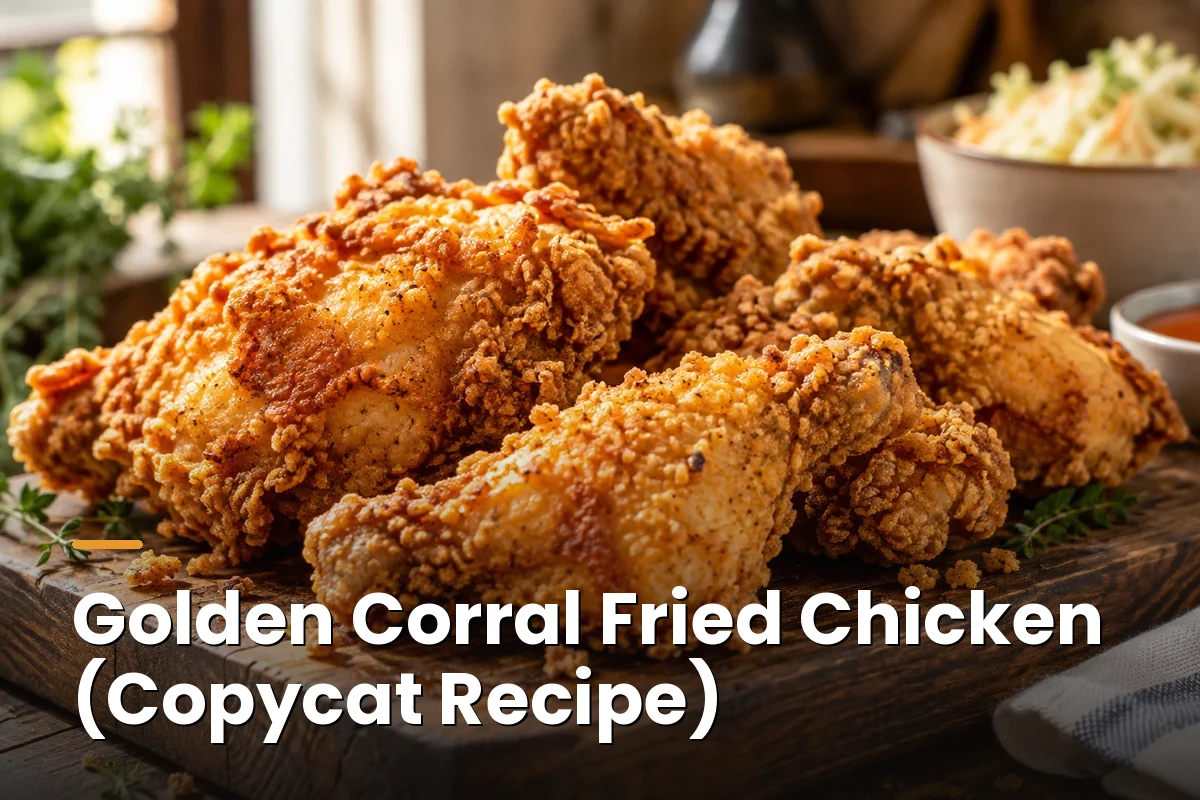
Quick facts about golden corral fried chicken recipe
Fry crispy, seasoned chicken at home with this copycat recipe, including the seasoned coating, oil temperature tips, and an oven and air fryer option. Golden Corral is an American buffet restaurant chain.
What makes fried chicken great
Great fried chicken comes down to three things, a good soak, a seasoned coating, and the right fry temperature. The soak keeps the meat juicy and adds flavor. The seasoned coating builds a crunchy, tasty crust. The fry temperature decides whether the crust turns golden and crisp or greasy and pale.
Get those three right and the rest is easy. The buffet version is not fancy. It is classic, seasoned, and crispy, the kind of fried chicken that works for a family dinner or a picnic. This recipe aims straight at that.
Ingredients
For the soak, you need two pounds of chicken pieces, such as thighs, drumsticks, and breasts, plus two cups of buttermilk. If you have no buttermilk, stir a spoon of lemon juice or vinegar into regular milk and let it sit for a few minutes.
For the coating, use two cups of all purpose flour, one tablespoon of salt, two teaspoons of black pepper, two teaspoons of paprika, one teaspoon of garlic powder, one teaspoon of onion powder, and a pinch of cayenne if you want a little heat. For frying, you need a few cups of a neutral oil with a high smoke point, such as vegetable or peanut oil.
Step by step
First, soak the chicken. Place the chicken in a bowl, pour the buttermilk over it, and stir to coat. Cover it and refrigerate it for at least one hour, or overnight for the juiciest result. The buttermilk tenderizes the meat and helps the coating stick.
Second, mix the coating. In a large dish, whisk together the flour, salt, pepper, paprika, garlic powder, onion powder, and cayenne. Taste a pinch to check the seasoning, since a well seasoned flour is what makes the crust flavorful.
Third, coat the chicken. Take each piece from the buttermilk, let the excess drip off, then press it into the seasoned flour until fully coated. For an extra crispy crust, dip it back in the buttermilk and into the flour a second time. Set the coated pieces on a rack and let them rest for about ten minutes, which helps the coating set.
Fourth, heat the oil. Pour enough oil into a heavy pot or deep pan to come about two inches up the side. Heat it to about 350 degrees Fahrenheit. Use a thermometer, since the right temperature is the key to crisp, non greasy chicken.
Fifth, fry in batches. Lower a few pieces into the oil, skin side down, without crowding the pan. Fry them for about twelve to fifteen minutes, turning once, until the crust is deep golden and the inside reaches a safe temperature. Cook chicken to an internal temperature of 165 degrees Fahrenheit, checked with a thermometer at the thickest part.
Sixth, drain and rest. Place the fried pieces on a rack over a tray, not on paper towels, which trap steam and soften the crust. Let them rest a few minutes before serving. Fry in batches so the oil stays hot.
Tips for crispy, juicy chicken
The oil temperature is the single biggest key. Too cool, and the chicken soaks up oil and turns greasy. Too hot, and the crust burns before the inside cooks. Keep it around 350 degrees Fahrenheit, and let it recover between batches, since adding cold chicken drops the temperature.
Do not crowd the pan. Too many pieces at once cool the oil and steam the crust. Fry a few pieces at a time for even, crisp results. Rest the coated chicken before frying, and rest it again after, both of which improve the crust.
Use a thermometer for the meat, not just the clock. Different pieces cook at different rates, since a thick breast takes longer than a thin drumstick. Checking the internal temperature keeps the chicken safe and stops you from overcooking it into dryness.
Common mistakes to avoid
The top mistake is frying at the wrong temperature. Greasy chicken means the oil was too cool, and burnt, raw centered chicken means it was too hot. A thermometer fixes both. The second mistake is skipping the soak, which leaves the meat drier and the coating less crisp.
A third mistake is a bland crust from under seasoned flour. Season the flour well and taste it before coating. A fourth mistake is draining on paper towels, which traps steam and softens the crust. Use a wire rack instead so air keeps the crust crisp.
An oven and air fryer option
You can make a lighter version without deep frying. For the oven, coat the chicken the same way, place it on a greased rack over a tray, spray it with oil, and bake at 400 degrees Fahrenheit for about 40 to 45 minutes, until golden and cooked through. Turn it once for even color.
For an air fryer, coat the chicken, spray it well with oil, and cook it at about 375 degrees Fahrenheit for around 25 minutes, turning halfway, until crisp and cooked to a safe temperature. These methods use far less oil and still give a crunchy crust, though the deep fried version stays the crispiest.
What to serve with it
Fried chicken pairs with the classics. Serve it with mashed potatoes, coleslaw, cornbread, or mac and cheese for a full comfort meal. Green beans or a simple salad add balance to the plate.
For a picnic, fried chicken travels well cold, alongside potato salad and biscuits. For a weeknight, a piece or two with a quick vegetable makes an easy dinner. Leftover fried chicken also works chopped into salads or sandwiches the next day.
Make ahead, storage, and reheating
You can soak the chicken a day ahead, which spreads out the work and improves the flavor. Fry it fresh for the best crust. If you need to fry ahead, cool the pieces on a rack and store them in the fridge.
Store leftovers in a sealed container in the fridge for up to three days. To bring back the crisp, reheat fried chicken in a hot oven or an air fryer rather than a microwave, which turns the crust soft. Heat it until it is hot all the way through. Fried chicken also freezes for up to two months, then reheats best in the oven.
Ingredient notes and swaps
A few swaps keep this recipe flexible. Buttermilk gives the juiciest, most tender meat, but a mix of regular milk with a spoon of lemon juice or vinegar stands in well. For the coating, all purpose flour is standard, though adding a little cornstarch makes the crust extra crisp.
Adjust the spice blend to your taste. More cayenne brings heat, while paprika alone keeps it mild and kid friendly. A spoon of garlic and onion powder does a lot of the flavor work, so do not skip them. Any chicken pieces work, from a cut up whole bird to a pack of thighs or drumsticks, though smaller pieces cook faster and more evenly.
How to scale it for a crowd
Frying for a crowd is all about keeping the oil hot. Fry in small batches, never crowding the pot, and let the oil return to temperature between batches. A large, heavy pot holds heat better than a thin one, which helps when you cook a lot.
To keep early batches hot and crisp while you finish the rest, hold the fried pieces on a wire rack in a low oven, around 200 degrees Fahrenheit. The rack keeps air moving so the crust stays crisp, and the low oven keeps the chicken warm without drying it. This lets you serve a big batch all at once, hot and crunchy.
A lighter oven and air fryer plan
For a crowd watching fat, the oven method scales well. Coat the chicken, set it on greased racks over trays, spray it with oil, and bake several pieces at once at 400 degrees Fahrenheit until golden and cooked through. It uses a fraction of the oil and frees you from standing over a hot pot.
The air fryer gives the crispiest lighter version, though it cooks fewer pieces at a time. For a family meal, run it in batches and hold finished pieces in a low oven, the same as with frying. These methods trade a little crunch for far less oil, which makes fried chicken a more everyday meal rather than a once in a while treat.
Troubleshooting your fry
Frying takes practice, and a few fixes handle the usual problems. If the chicken came out greasy, the oil was too cool, so bring it up to about 350 degrees Fahrenheit and let it recover between batches. If the crust burned before the inside cooked, the oil was too hot, so lower the heat and give thick pieces more time.
If the coating fell off, the chicken may have been too wet or rested too little after coating, so let coated pieces sit about ten minutes before frying. If the crust turned out soft, you may have drained the chicken on paper towels, which traps steam, so use a wire rack instead. If the inside was still pink, check with a thermometer and return underdone pieces to the oil until they reach a safe temperature.
Prep and safety tips
Set up before you start, since frying moves fast and hot oil demands attention. Arrange a coating station, a resting rack, and a thermometer within reach. Keep a lid nearby in case of a flare up, and never leave hot oil unattended. Lower the chicken away from you to avoid splashes.
Prep the chicken ahead by soaking it in buttermilk the night before, which spreads the work and improves the flavor. Let the coated pieces rest before they hit the oil. Fry in small batches so the oil stays hot, and check the temperature between batches. Once you get a feel for the oil temperature, frying becomes far less stressful and the results turn consistent.
The takeaway
This copycat fried chicken delivers a crunchy, seasoned crust over juicy meat. Soak the chicken in buttermilk, coat it in well seasoned flour, and fry it at a steady 350 degrees Fahrenheit without crowding the pan. Rest it on a rack, and check the meat with a thermometer for safety. Avoid the greasy and burnt traps that come from the wrong oil temperature, and skip the paper towel drain. Serve it with the classic sides, and you get the crispy, homestyle fried chicken the buffet is loved for, made fresh in your own kitchen.
Related guides
- 25 Golden Corral Copycat Recipes to Make at Home
- Golden Corral Yeast Rolls (Copycat Recipe)
- Golden Corral Mac and Cheese (Copycat Recipe)
- Golden Corral buffet prices
- buffet hours
- full buffet menu
Frequently asked questions
What is the seasoning in the coating?
What oil temperature should I use?
Can I make it without deep frying?
How do I know it is done?
How do I reheat it crispy?
Why soak the chicken in buttermilk?
Can I fry without buttermilk?
What oil is best for frying?
How do I know the chicken is cooked?
Can I make it ahead for a party?
What is the seasoning in the coating?
A blend of salt, pepper, paprika, garlic powder, onion powder, and a pinch of cayenne.
What oil temperature should I use?
About 350 degrees Fahrenheit, which keeps the crust crisp and not greasy.
Can I make it without deep frying?
Yes. Bake it at 400 degrees or use an air fryer at about 375 degrees for a lighter version.
How do I know it is done?
Check that the thickest part reaches 165 degrees Fahrenheit with a thermometer.
How do I reheat it crispy?
Use a hot oven or air fryer, not a microwave, which softens the crust.
Why soak the chicken in buttermilk?
It tenderizes the meat, adds flavor, and helps the coating stick.
Can I fry without buttermilk?
Yes. Use regular milk with a spoon of lemon juice or vinegar as a stand in.
What oil is best for frying?
A neutral oil with a high smoke point, such as vegetable or peanut oil.
How do I know the chicken is cooked?
Check that the thickest part reaches 165 degrees Fahrenheit with a thermometer.
Can I make it ahead for a party?
Yes. Hold fried pieces on a rack in a low oven to keep them hot and crisp.


