
Golden Corral Chocolate Fountain Fondue (Copycat Recipe)
Last updated: October 7, 2026 · Verified against official Golden Corral info
This guide covers golden corral chocolate fountain recipe. This copycat recreates the flowing chocolate that made the buffet’s dessert bar famous. With the right chocolate and a little added oil for flow, you get a smooth, pourable fondue that works in a home chocolate fountain or a warm bowl. It turns fruit, marshmallows, and cookies into a party centerpiece. The recipe is simple, but the flow depends on getting one ratio right. Follow the steps below and you bring the chocolate fountain home for a fraction of a catered cost.
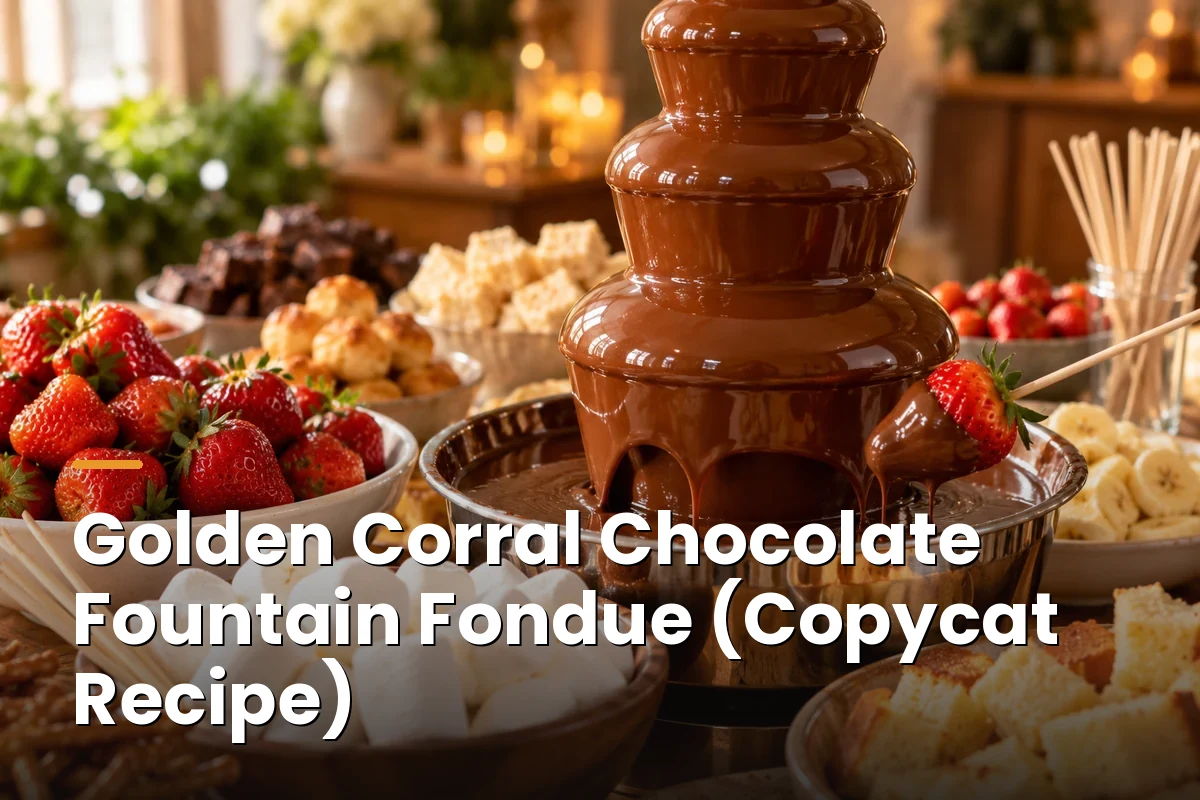
Quick facts about golden corral chocolate fountain recipe
Recreate the flowing chocolate fondue at home with this copycat recipe, including the right chocolate to oil ratio, best dippers, and fountain tips. Golden Corral is an American buffet restaurant chain.
What makes fountain chocolate different
Regular melted chocolate is too thick to flow in a fountain. It seizes, clumps, and clogs the pump. Fountain chocolate needs to be thinner and smoother, so it cascades in a steady sheet. The trick is to add a fat that keeps the chocolate loose and pourable while it stays warm.
That fat is usually a neutral oil, added in a small amount. It thins the chocolate just enough to flow without changing the taste much. This one adjustment is the whole secret to fountain style chocolate. Skip it, and even good chocolate will not flow right.
Ingredients
You need about two pounds of chocolate for a small home fountain, and more for a larger one. Use a good melting chocolate, such as chocolate melting wafers, semisweet chips, or a quality bar chopped fine. Melting wafers made for coating flow the smoothest, since they are designed to melt thin.
Add about a quarter cup of a neutral flavored oil, such as vegetable, canola, or a light coconut oil, for every two pounds of chocolate. Start with less and add more as needed to reach the right flow. A splash of vanilla can round out the flavor, though it is optional.
Step by step
First, melt the chocolate. Melt it gently, using a microwave in short bursts with stirring between each, or a double boiler over low heat. Go slow, since chocolate scorches easily and turns grainy if it gets too hot. Stir until it is fully smooth.
Second, add the oil. Stir in the oil a little at a time. The chocolate should thin into a smooth, pourable liquid that runs off a spoon in a steady stream. Add oil until it reaches that flow, but do not overdo it, since too much makes the chocolate greasy.
Third, warm the fountain. If you are using a fountain, run it empty for a minute so the basin warms. A cold fountain can seize the chocolate. Then pour the warm chocolate in and turn on the motor.
Fourth, get the flow going. When you first start the fountain, the chocolate may sputter as air works out of the pump. Let it run for a minute until it flows in a smooth, even sheet. If it looks too thick, stop and stir in a little more warm oil.
Fifth, serve in a bowl if you have no fountain. Keep the melted chocolate warm in a small slow cooker or a bowl over warm water. Guests dip straight into it. This works just as well for a small group.
Tips for smooth flow
The right chocolate makes the biggest difference. Melting wafers built for coating flow far better than regular chocolate chips, which contain stabilizers that keep them thick. If you use chips, expect to add a little more oil to reach a good flow.
Keep everything warm. Cold dippers, a cold fountain, or a cool room can thicken the chocolate and slow the flow. Warm the fountain first, and bring the chocolate to a smooth, warm liquid before you pour it in. Never add water, since even a drop can seize the whole batch into a stiff, grainy mess.
Add the oil slowly and watch the flow. You want a thin, steady stream, not a thick drip. It is easy to add more oil, but you cannot take it out, so go in small steps until it looks right.
Common mistakes to avoid
The top mistake is chocolate that is too thick to flow. Fix it by adding a little more oil and keeping the chocolate warm. The second mistake is overheating the chocolate, which makes it grainy. Melt it low and slow, and stir often.
A third mistake is letting water touch the chocolate, which seizes it instantly. Keep all bowls, spoons, and the fountain fully dry. A fourth mistake is a cold fountain that stops the flow. Warm the basin before you pour. A fifth mistake is walking away, since a fountain needs a quick check now and then to keep flowing smoothly.
The best dippers
Half the fun is what you dip. Fresh fruit leads the way, with strawberries, banana slices, pineapple chunks, apple slices, and grapes all working well. Pat wet fruit dry first, since water on the fruit can drip into the chocolate.
Beyond fruit, marshmallows, pretzels, cookies, graham crackers, pound cake cubes, and rice cereal treats all make great dippers. Pretzels add a salty contrast that pairs well with sweet chocolate. Set out skewers or fondue forks so guests can dip without using their fingers near shared chocolate.
Ways to change it up
You can shift the flavor and look. Use white chocolate for a lighter fountain, or milk chocolate for a sweeter, kid friendly one. Swirl in a little peanut butter or caramel for a different taste, though keep the fondue thin enough to flow.
For a themed party, tint white chocolate with oil based food coloring to match your colors. Set up two small bowls, one dark and one white, so guests get a choice. A dusting of sprinkles or crushed nuts at the dipping station lets people finish their bites their own way.
Serving and cleanup
Set the fountain or bowl at the center of the dessert table, with dippers arranged around it and plenty of skewers and small plates. Remind guests to use a fresh skewer for each dip, which keeps the shared chocolate clean. Keep a stack of napkins nearby, since a chocolate fountain is a joyful mess.
For cleanup, let leftover chocolate cool, then scrape it out before it hardens in the fountain. Warm, soapy water handles the rest. Wipe the pump and basin well so the fountain is ready for next time. Save any clean leftover chocolate in a sealed container to melt again later.
Ingredient notes and swaps
The chocolate choice drives the whole result. Melting wafers, sometimes called candy melts or coating chocolate, flow the smoothest because they are built to melt thin. Good quality chocolate chips work with more added oil, and a chopped chocolate bar melts well but needs the most oil to flow. Pick by how smooth you need the flow to be.
For the oil, any neutral oil works, such as vegetable, canola, or a light, refined coconut oil. Coconut oil adds a faint coconut note that pairs nicely with chocolate. Avoid strong flavored oils like olive oil, which fight the chocolate. Never substitute water or milk for the oil, since water seizes chocolate and milk can scorch and clog a fountain.
How to scale it for a party
Match the amount of chocolate to your fountain and your crowd. A small home fountain usually needs about two pounds of chocolate to run well, and it must stay at least at its minimum fill line, or the pump runs dry and sputters. A larger fountain needs more, so check the manual for the fill amount.
For a big party, melt a backup batch of chocolate and keep it warm on the side. As guests dip, the level drops, and topping it up with warm, pre thinned chocolate keeps the flow steady all night. Set the fountain on a table it can stay on, since moving a running fountain spills chocolate everywhere.
Dietary notes and options
A chocolate fountain suits many diets with the right chocolate. Choose a dairy free dark chocolate and a plant oil for a vegan friendly fountain, and offer fruit and dairy free cookies as dippers. Read labels if guests have allergies, since some chocolates carry nut or milk warnings from shared equipment.
Keep the dipping station tidy for safety and for anyone with allergies. Offer separate spoons or a small pour spout for guests who prefer to drizzle rather than dip into the shared flow. Fresh fruit like strawberries, banana, and pineapple keeps the treat feeling a little lighter than an all cookie spread, and it adds color to the table.
Troubleshooting your fountain
A chocolate fountain has a few quirks, and each has a fix. If the chocolate flows in a thin, broken sheet, it is too thick, so stir in a little more warm oil until it cascades evenly. If it sputters when you start, that is usually trapped air working out of the pump, so let it run a minute before you worry.
If the chocolate seized into a stiff, grainy lump, water or steam got in, and there is no easy rescue, so start fresh and keep everything dry. If the flow slows during the party, the chocolate is cooling, so most fountains have a heat setting to keep it warm, or you can top it up with fresh warm chocolate. If the pump clogs, a chunk of unmelted chocolate or a solid dipper likely fell in, so turn it off and clear it.
Setup and cleanup tips
A smooth event comes down to setup. Place the fountain on a sturdy table where it can stay put, and lay down a wipeable cloth to catch drips. Set the dippers and skewers around it, and keep extra napkins and small plates close by. Warm the fountain empty for a minute before you add the chocolate, so the basin does not chill it.
For cleanup, turn off and unplug the fountain, then let the leftover chocolate cool slightly before you scrape it out, since it is easier to remove before it hardens. Wash the removable parts in warm, soapy water and dry them fully, since any water left behind will ruin the next batch. Store clean, leftover chocolate in a sealed container to melt again another day.
Recipe at a glance
Here is the quick version. Melting and thinning the chocolate takes about ten to fifteen minutes, and then the fountain runs through your event. About two pounds of chocolate suits a small home fountain and serves a group of dippers. The difficulty is easy, though it takes a little attention to get the flow right and keep it going.
You need a home chocolate fountain or a small slow cooker, plus bowls, skewers, and your dippers. The main skill is thinning the chocolate with the right amount of oil so it flows in a smooth sheet without turning greasy. Keep everything warm and dry, set out plenty of fruit and cookies, and the fountain becomes the centerpiece of the table.
The takeaway
A home chocolate fountain is easier than it looks, and it turns any gathering into an event. Melt good chocolate gently, thin it with a little neutral oil until it flows in a smooth stream, and keep everything warm and dry. Use melting wafers for the best flow, and never let water near the chocolate. Set out fruit, marshmallows, and cookies with skewers, and let guests dip. You bring the buffet’s most fun dessert home for a small cost and a big smile from everyone at the table.
Related guides
- 25 Golden Corral Copycat Recipes to Make at Home
- Golden Corral Yeast Rolls (Copycat Recipe)
- Golden Corral Mac and Cheese (Copycat Recipe)
- Golden Corral buffet prices
- buffet hours
- full buffet menu
Frequently asked questions
Why won’t my chocolate flow?
What chocolate works best?
Why add oil to the chocolate?
What can you dip?
Can I make it without a fountain?
How much chocolate do I need?
Can I reuse leftover chocolate?
What chocolate is easiest to work with?
Can I make a white or milk chocolate fountain?
Is a chocolate fountain hard to clean?
Why won’t my chocolate flow?
It is too thick or too cool. Add a little neutral oil and keep it warm.
What chocolate works best?
Melting wafers made for coating flow the smoothest, though chips work with extra oil.
Why add oil to the chocolate?
Oil thins the chocolate so it flows in a steady stream instead of seizing.
What can you dip?
Strawberries, bananas, pineapple, marshmallows, pretzels, cookies, and pound cake all work well.
Can I make it without a fountain?
Yes. Keep the melted chocolate warm in a small slow cooker or bowl and dip straight in.
How much chocolate do I need?
About two pounds for a small home fountain, and more for a larger one.
Can I reuse leftover chocolate?
Yes. Cool and store clean leftover chocolate in a sealed container to melt again later.
What chocolate is easiest to work with?
Melting wafers made for coating, since they melt thin and flow smoothly.
Can I make a white or milk chocolate fountain?
Yes. Both work with the same oil trick to keep them flowing.
Is a chocolate fountain hard to clean?
Not really. Scrape out the chocolate before it hardens, then wash the parts in warm, soapy water.


