
Golden Corral Rules and Buffet Etiquette
Last updated: October 7, 2026 · Verified against official Golden Corral info
This guide covers golden corral buffet etiquette rules. A buffet runs on a few clear rules and a set of unwritten manners. The rules protect the business. The manners keep the room pleasant for everyone. Know both and you glide through the meal without a hitch. This guide covers the policies that matter most, like sharing and taking food home, then the etiquette that marks a considerate guest, including how to handle allergies, kids, and large groups.
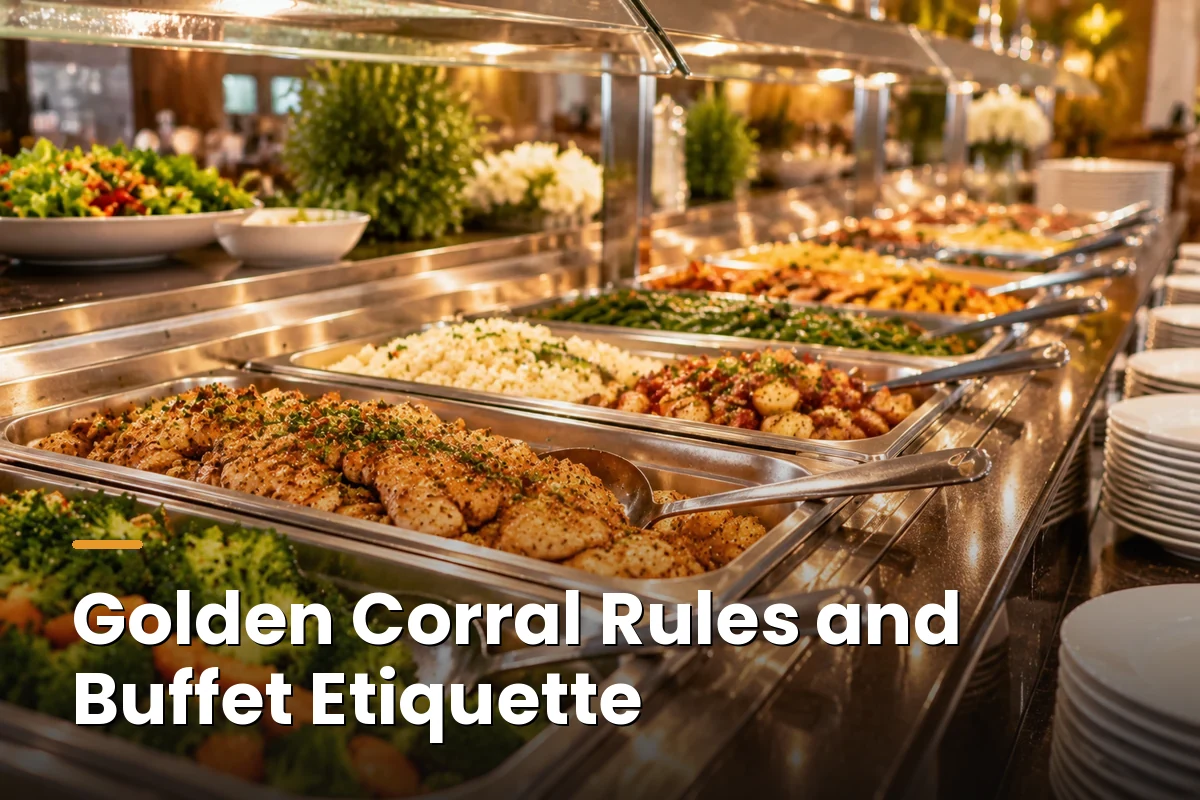
- Quick facts about golden corral buffet etiquette rules
- The rules that matter
- Can you take leftovers home?
- The hygiene rule everyone should follow
- The unwritten manners
- Handling allergies at a buffet
- Bringing kids the right way
- Large groups and busy rooms
- Handling the shared space and the staff
- Frequently asked questions
Quick facts about golden corral buffet etiquette rules
The buffet rules that matter, from sharing plates to taking food home, plus the unwritten manners that keep the line moving and the room pleasant. Golden Corral is an American buffet restaurant chain.
The rules that matter
Start with the policies most likely to trip you up. Each restaurant sets its own details, so treat these as the common practice and confirm anything unusual at your location.
One price covers one person. You cannot buy a single buffet and split it between two people. The price pays for one guest to eat from the line. Sharing one paid meal across two eaters breaks the model and the house rules.
Use a fresh plate each trip. Health rules and simple hygiene call for a clean plate every time you return to the line. Staff will happily take your used plate. Reusing the same plate at the serving trays spreads germs and is discouraged everywhere.
Eat in, or pay to take out. You cannot fill a bag to carry home from a dine in meal. Taking food out means ordering a to go box, which is priced by weight, separate from the eat in price. Trying to sneak food out is both against the rules and unfair to the business.
Children usually need an adult. Kids are welcome, but a parent or guardian should supervise trips to the line. Hot trays, crowds, and serving tools make the buffet no place for unsupervised small children.
Can you take leftovers home?
This question comes up constantly, so it deserves a clear answer. The eat in buffet is meant to be eaten there. You should not pack a container of food to carry out at the end of a dine in meal. That is different from a paid to go order, which is allowed and priced by the pound. If you want food for later, order it to go from the start rather than filling a box at the end of your meal. The rule is simple. Pay for what leaves the building.
The hygiene rule everyone should follow
One habit protects every guest in the room. Never let your used plate, your fork, or your fingers touch the shared food or the serving spoons. This is how germs travel at a buffet. A fresh plate each trip is the first defense. Using only the serving tool that belongs to each dish is the second.
Double dipping deserves its own mention. Never taste a food and go back for more with the same spoon or fork. Never dip a chip or a fry, take a bite, and dip again. In a shared space, that single act can spread illness to strangers. The whole system depends on everyone keeping their own utensils out of the common food.
The unwritten manners
Now the etiquette. None of this appears on a sign, but it separates a smooth room from a frustrating one.
Do not hover over the trays. Serve your portion and step away so the next person can reach. Blocking a station while you decide holds up everyone behind you. Scan the line first, then move in when you know what you want.
Always use the serving tools provided. Each dish has its own spoon or tongs for a reason. Never use your own fork, and never move a serving spoon from one dish to another, since that mixes foods and spreads allergens.
Take what you will eat. The format is unlimited, so there is no need to pile a plate high on the first trip. Take a reasonable amount, and come back for more if you want it. Heaping a plate and leaving half wastes food and looks careless.
Keep the line moving in one direction. Follow the flow of traffic rather than cutting across it. If you missed something, loop back around rather than reaching over other guests.
Handling allergies at a buffet
Guests with food allergies face a real challenge in a shared space. Serving spoons move between dishes. Trays sit close together. Crumbs and sauces cross from one pan to the next. A dish that contains no allergen can still pick up traces from a neighbor.
Etiquette and safety meet here. Tell a staff member about a serious allergy, and ask about ingredients before you serve. Be careful at crowded stations where cross contact is most likely. Understand that a buffet cannot promise an allergen free plate, so your own caution does more than any policy. For a severe allergy, the safest move is sometimes to skip the shared line for the food that puts you at risk.
Bringing kids the right way
Families make up a big share of buffet guests, and a few habits keep the visit smooth. Walk younger children through the line rather than sending them alone. Serve their plates for them at hot stations, where serving tools and heat pose a risk.
Keep an eye on the dessert area in particular. The sweets and any chocolate fountain draw children, and small hands near shared food raise hygiene concerns. Teach kids to use the serving tools and to take only what they will eat. A calm, supervised child makes the room better for every table nearby.
Large groups and busy rooms
Big tables call for extra care. Send group members to the line in small waves rather than all at once, so you do not crowd a station. Stack your used plates loosely at the table so a server can clear them fast. Leave the space tidy for the staff who reset it.
On a busy night, patience is the main courtesy. Wait your turn at popular stations. Let a parent with a full plate and a child pass ahead. Small kindnesses ease a packed room for everyone in it.
Handling the shared space and the staff
A buffet is a shared room, and small courtesies add up. Say thank you when someone refills your drink or clears your stack, since that work is easy to overlook. Flag down a manager quietly if something is wrong, rather than making a scene at the table. Staff respond better to a calm word than a loud complaint, and most will fix a problem fast when asked kindly.
Remember the tip, too. A server clears your plates and pours your refills through the whole meal, so a small tip is part of good buffet manners.
Why the manners matter
Etiquette is not about being fussy. It is about a room full of strangers sharing food and space at the same time. When everyone uses the tools, keeps the line moving, and takes only what they need, the whole system works. When a few people hover, double dip, or waste food, the experience drops for everyone.
Good manners also make you a welcome regular. Staff notice the guests who keep a clean table and treat the room with care. That goodwill tends to come back to you in friendlier, faster service.
Courtesy for guests who need help
A buffet asks every guest to carry a plate through a crowd, which is harder for some than others. A little awareness goes a long way. Give space and time to guests using a wheelchair, a walker, or a cane. Do not crowd them at a station, and let them set their own pace.
Staff will often carry a plate for a guest who cannot manage the line, and you can offer the same kindness if you see someone struggling. Hold a door, clear a path, or step aside without making a show of it. These small acts cost you nothing and make the room welcoming for everyone in it.
Phones, photos, and saving seats
Modern habits bring modern manners. Keep phone calls quiet and short at the table, since the room is shared. If you want a photo of the impressive spread, take it without blocking the line or getting in another guest’s way.
Saving seats is another common friction point. In a busy room, do not spread across a large table for a small group or hold empty seats you will not use. Take the space you need and free the rest. On a packed day, a family waiting for a table will thank you for it.
Handling a problem the right way
Something will occasionally go wrong, like a dish that ran out or a table that was not cleaned. How you handle it marks you as much as anything. Speak to a staff member or a manager calmly and clearly. Describe the problem and give them a chance to fix it.
Most issues get solved fast when raised kindly. A calm word brings a fresh pan, a clean table, or a quick apology. A loud scene rarely gets a better result and makes the room worse for the families around you. Save the strong reaction for a real safety concern, and handle the everyday hiccups with the patience you would want in return.
Extra care at the salad bar and dessert station
Two stations call for a little more attention than the rest. The salad bar holds many open bowls close together, so it is easy to spill one topping into another or drip dressing across the counter. Serve carefully, keep each spoon in its own bowl, and wipe up a spill or flag a staff member if you make one.
The dessert station, and any chocolate fountain, draws children and crowds. Keep young ones supervised, and teach everyone to use skewers or tongs rather than fingers near shared sweets. Never dip an item, take a bite, and dip again at a fountain, since that spreads germs to every guest after you. These two stations are where good manners matter most, because the food sits open and many hands reach in.
Leaving a good impression
The end of the meal is your last chance to be a considerate guest, and it takes almost no effort. Stack your plates loosely so a server can clear them in one trip. Gather your napkins and trash into a small pile. Push in your chairs as you leave, especially in a busy room where the next family is waiting.
A quiet thank you to the server who kept your drinks full costs nothing and means a lot. Staff remember the tables that treated them and the room with care. Leave the space a little better than you found it, and you make the whole system work for the next guest, which is what buffet etiquette is really about.
A short etiquette recap
Boil the whole thing down to a few habits you can carry in your head. Take a fresh plate every trip. Use only the spoon that belongs to each dish, and never double dip. Serve your portion and step aside so the next guest can reach. Take what you will eat, and go back for more rather than piling one plate high. Watch your children at the line and the dessert station. Tip the server who clears your plates.
Follow those, and you cover the rules and the manners at once. None of it is hard, and none of it slows you down. It simply keeps a shared room pleasant for the families eating beside you.
The takeaway
The rules are simple. One price per person, a fresh plate each trip, eat in or pay to take out, and supervise the kids. The manners are just as simple. Serve and step aside, use the tools, never double dip, take what you will eat, and keep the line moving. Handle allergies with care, guide your children, and treat the staff well. Follow both the rules and the manners and you get a smooth, pleasant meal, while making the room better for everyone who shares it with you.
Related guides
- The Best Time to Go to Golden Corral
- Do You Tip at Golden Corral?
- What to Avoid at Golden Corral
- Golden Corral buffet prices
- buffet hours
- full buffet menu
Frequently asked questions
Can two people share one buffet?
Can you take food home from the buffet?
Do you need a new plate each trip?
How should you handle a food allergy?
What is the top etiquette rule?
Can two people share one buffet?
No. One price covers one person eating from the line.
Can you take food home from the buffet?
Not from a dine in meal. Order a to go box, priced by weight, instead.
Do you need a new plate each trip?
Yes. A fresh plate each time is standard for hygiene and often required.
How should you handle a food allergy?
Tell staff, ask about ingredients, and be careful at shared trays, since cross contact is common.
What is the top etiquette rule?
Use the serving tools, never double dip, serve your portion, and step away so others can reach.


